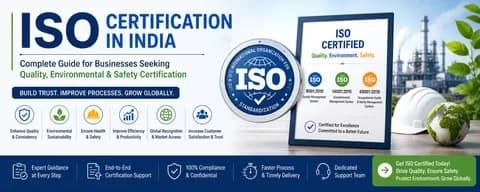
ISO Certification in India — Complete Guide for Businesses Seeking Quality, Environmental & Safety Certification
Whether you are a manufacturer trying to win a government contract, an exporter building credibility with international buyers, or a service business looking to demonstrate operational excellence — ISO Certification is one of the most recognised and respected quality credentials your business can hold.
ISO — the International Organization for Standardization — publishes internationally agreed standards covering quality management, environmental management, occupational health and safety, information security, food safety, and dozens of other management disciplines. When a business achieves ISO Certification, it means an independent, accredited certification body has verified that its management system meets the requirements of the relevant ISO standard.
At Ornate Quality Services, we help businesses across India achieve ISO Certification — from ISO 9001 for quality management to ISO 14001 for environmental management and ISO 45001 for occupational health and safety. In this guide, we cover everything you need to know — what ISO Certification is, which standard is right for your business, how the process works, and what it costs.
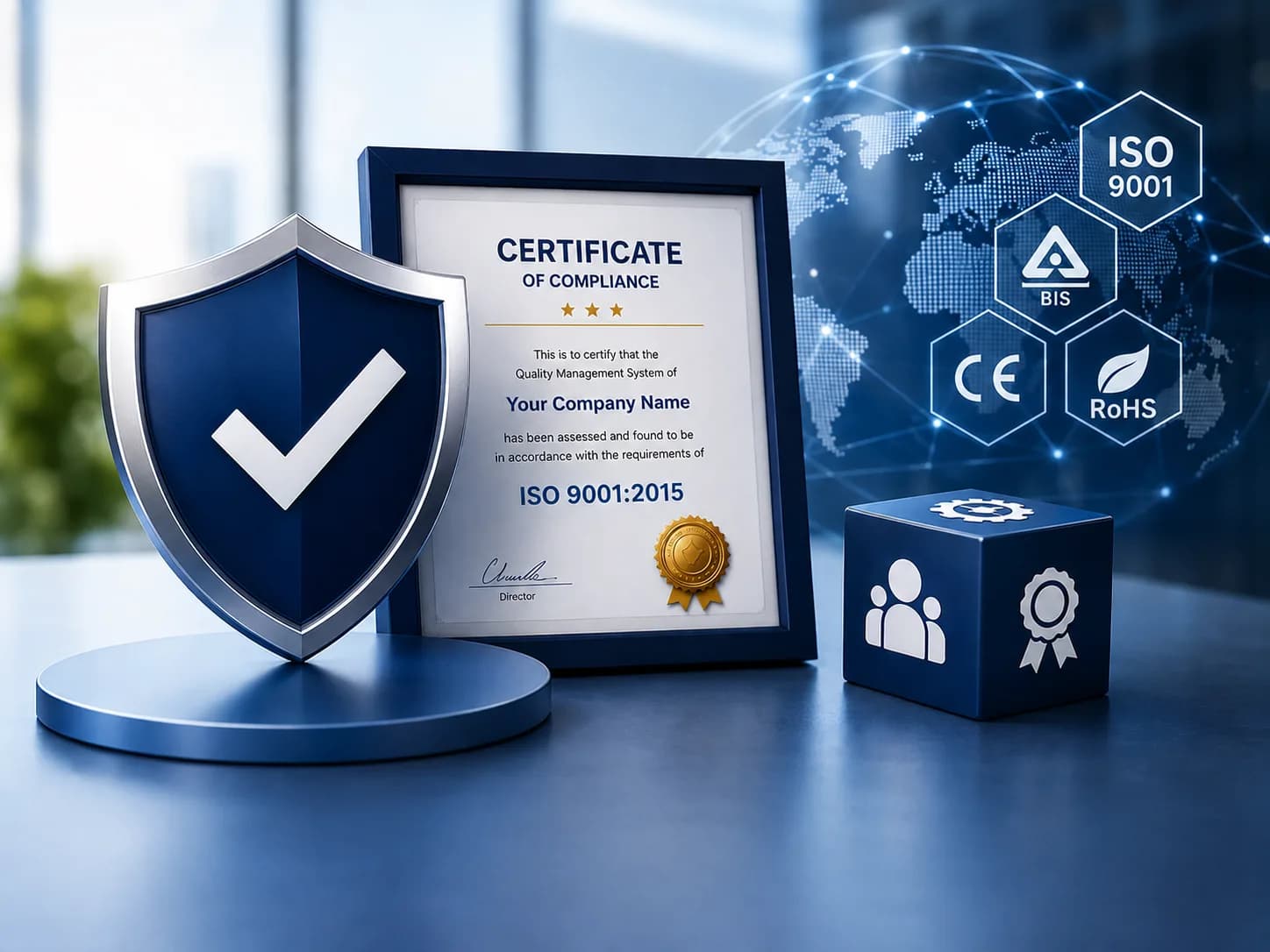
Ready to get ISO certified? Contact our team for a free consultation and we will identify the right ISO standard for your business and build a clear implementation roadmap.
What is ISO Certification?
ISO Certification — also known as ISO Registration — is the formal confirmation by an independent, accredited third-party certification body that an organisation's management system, processes, or products conform to the requirements of a specific ISO standard.
ISO itself does not certify organisations. Certification is carried out by accredited certification bodies that are authorised to audit and certify organisations against ISO standards.
For businesses in India, ISO Certification is typically issued by NABCB-accredited or internationally recognised certification bodies. ISO Certification is not a one-time achievement — it requires internal audits, management review, and periodic surveillance audits to maintain the certificate.
Why ISO Certification Matters for Your Business
Mandatory for Many Tenders and Contracts
Government tenders, PSU procurement, and large corporate supply chain requirements often list ISO 9001 as mandatory. Without it, businesses can be disqualified even with strong pricing and capability.
Builds Buyer Confidence in Export Markets
International procurement teams frequently treat ISO certification as a baseline quality credential. ISO removes a key barrier for exporters and positions you as a credible supplier.
Improves Internal Operations and Reduces Costs
ISO implementation strengthens process discipline, documentation, controls, and continuous improvement — commonly reducing errors, rework, complaints, and operational costs.
Demonstrates Environmental and Safety Commitment
ISO 14001 and ISO 45001 demonstrate commitment to environmental responsibility and worker safety. These are increasingly required by multinational clients and relevant for ESG requirements.
Strengthens Business Valuation and Investor Confidence
ISO certification signals management maturity and lower operational risk — improving financing and credibility in due diligence.
ISO Certifications Available Through Ornate Quality Services
Ornate Quality Services provides consulting and implementation support for a wide range of ISO management system certifications. The following table covers the most commonly sought ISO certifications in India.
| ISO Standard | Focus Area | Who Needs It |
|---|---|---|
| ISO 9001:2015 | Quality Management System | Manufacturers, service providers, traders — anyone who wants to demonstrate quality management |
| ISO 14001:2015 | Environmental Management System | Manufacturers, industries with environmental impact, exporters to European markets |
| ISO 45001:2018 | Occupational Health & Safety | Manufacturing plants, construction companies, industries with workplace safety obligations |
| ISO 22000:2018 | Food Safety Management | Food manufacturers, processors, packagers, restaurants, food supply chain businesses |
| ISO 27001:2022 | Information Security Management | IT companies, BPOs, data processors, financial services, any business handling sensitive data |
| ISO 13485:2016 | Medical Devices Quality | Medical device manufacturers, importers, distributors, and service providers |
| ISO 50001:2018 | Energy Management | Energy-intensive industries, manufacturers with high energy consumption, sustainability-focused businesses |
| ISO 22301:2019 | Business Continuity | Financial institutions, IT companies, critical infrastructure operators |
| IATF 16949:2016 | Automotive Quality | Automotive parts manufacturers and suppliers to the automotive industry |
ISO Certification Process — Step by Step
Many businesses benefit from implementing multiple standards together as an Integrated Management System (IMS). Implementing ISO 9001, ISO 14001, and ISO 45001 together is often more efficient than separate projects.
Step 1 — Gap Analysis
We compare your current processes and documentation with the chosen ISO standard to identify gaps and priorities. The output becomes your implementation roadmap.
Step 2 — Management System Documentation
We develop policies, procedures, work instructions, and records tailored to how your business actually operates, so the system is practical and audit-ready.
Step 3 — Implementation & Employee Training
We roll out the documented processes, train teams, and establish monitoring and measurement systems required by the standard so implementation is real (not just paperwork).
Step 4 — Internal Audit
We train internal auditors and conduct the first internal audit to identify non-conformances before the certification audit, improving first-time success.
Step 5 — Management Review
We facilitate the formal management review required by ISO, covering audit results, objectives, performance data, customer feedback, and improvement actions.
Step 6 — Certification Body Selection & Stage 1 Audit
We help you select a credible accreditation-backed certification body and prepare for Stage 1, which reviews documentation and readiness before Stage 2.
Step 7 — Stage 2 Certification Audit
Stage 2 is the main on-site audit that verifies implementation in practice. We support your team to present records and demonstrate process control confidently.
Step 8 — Certification & Ongoing Surveillance
After successful audit closure, the certificate is issued for a 3-year cycle with annual surveillance audits. We help you maintain compliance and prepare each year.
ISO Certification Requirements for Businesses in India
Any organisation can pursue ISO certification. Across most ISO management system standards, you will need leadership commitment, a defined scope, documented processes and records, trained internal auditors, and management review.
Accredited Certification Body
ISO certificates should be issued by NABCB-accredited or internationally recognised accreditation bodies (IAF member). Certificates from non-accredited bodies are often not accepted by tenders and procurement teams.
Not sure which ISO standard fits your business or whether you are ready for certification? Contact us for a free readiness assessment.
Documents Required for ISO Certification
Documentation requirements vary by standard, but the following represents the core framework required across most ISO management systems.
| No. | Document | Details |
|---|---|---|
| 1 | Quality / Management Policy | Top management commitment statement defining objectives for the management system |
| 2 | Scope of Certification | Statement defining the boundaries and applicability of the management system |
| 3 | Risk and Opportunity Register | Identification and assessment of risks/opportunities relevant to the system |
| 4 | Objectives and Targets | Measurable objectives with plans for achieving them |
| 5 | Process Documentation | Procedures and work instructions for key processes in scope |
| 6 | Internal Audit Records | Audit plans, checklists, findings, corrective actions |
| 7 | Management Review Records | Minutes and decisions from management review meetings |
| 8 | Corrective Action Records | Non-conformance records and corrective action evidence |
| 9 | Training Records | Competence and training evidence for relevant roles |
| 10 | Performance Monitoring Data | KPIs and measurements tracking key process performance |
ISO Certification Cost in India
Certification Body Audit Fees
Audit fees depend on audit days required (based on headcount, scope, sites, and complexity). For many SMEs, initial certification audits typically range from INR 30,000 to INR 1,50,000, with annual surveillance fees commonly INR 20,000 to INR 80,000.
Implementation and Consulting Fees
Implementation includes gap analysis, documentation, training, internal audit support, management review facilitation, and certification support. Ornate provides fixed professional fees based on standard and organisational scope.
Integrated Management Systems — Cost Savings
If you implement ISO 9001 + ISO 14001 + ISO 45001 together, shared documentation and audits can reduce overall cost and effort versus three separate projects.
ISO Certificate Validity and Surveillance Cycle
ISO certificates typically follow a 3-year cycle: initial certification audit, annual surveillance audits in years 1 and 2, and recertification in year 3.
Standard Revisions
ISO standards are periodically revised with transition periods. We track revisions and help you transition proactively so your certificate remains valid.
Key Benefits of ISO Certification for Indian Businesses
- Tender eligibility — meet mandatory ISO requirements for government, PSU, and corporate tenders
- Export credibility — satisfy international buyer requirements for quality management certification
- Operational improvement — documented processes, reduced errors, and systematic quality control
- Customer satisfaction — structured complaint handling and feedback processes
- Employee confidence — clear roles, responsibilities, and safety systems improve workplace culture
- Risk management — systematic risk identification and mitigation reduces disruptions
- Regulatory compliance — ISO 14001 and ISO 45001 support compliance with environmental and safety obligations
- Business valuation — ISO certification signals management maturity in due diligence
- Continuous improvement — built-in improvement cycle drives ongoing enhancement
Choosing the Right ISO Standard for Your Business
ISO 9001, ISO 14001, and ISO 45001 are the most common certifications. The table below compares them at a practical level.
| Factor | ISO 9001 | ISO 14001 | ISO 45001 |
|---|---|---|---|
| Focus | Quality of products and services | Environmental impact and management | Worker health, safety, and wellbeing |
| Primary Benefit | Customer satisfaction, tender eligibility | Environmental compliance, export markets | Legal compliance, accident prevention |
| Most Needed By | All businesses, manufacturers, exporters | Manufacturing, industrial, export businesses | Manufacturing, construction, industrial |
| Mandatory For | Many government tenders and PSU contracts | European export, ESG reporting (often) | Factories Act regulated facilities (often) |
| Implementation Timeline | 3 to 6 months typically | 4 to 8 months typically | 4 to 8 months typically |
| Can Be Combined? | Yes — IMS with 14001 and 45001 | Yes — IMS with 9001 and 45001 | Yes — IMS with 9001 and 14001 |
For most manufacturers, ISO 9001 is the best starting point. If your operations have environmental footprint or safety-critical risk, adding ISO 14001 and ISO 45001 as an IMS is often the most efficient approach.
Real Example — How We Helped a Pune Manufacturer Get ISO 9001 Certified and Win a Government Contract
A Pune-based manufacturer of industrial fasteners approached Ornate Quality Services after losing a government tender where ISO 9001 was mandatory. They had a target of 6 months to achieve certification before the next tender cycle.
The Challenge
They had limited formal documentation and processes. While operations ran effectively, informal practices created significant gaps for ISO audit expectations.
What We Did
We performed a gap analysis, created QMS documentation, trained internal auditors, conducted internal audit, facilitated management review, and coordinated Stage 1 and Stage 2 audits with an accredited certification body. We supported the team throughout audit closure.
The Result
ISO 9001:2015 certification was achieved within 5 months and 3 weeks. The business qualified for the next tender cycle and won a supply contract worth INR 1.8 crore. They have maintained certification through surveillance audits and are implementing ISO 14001 next.
Frequently Asked Questions — ISO Certification
ISO certification is voluntary in most cases, but it is often practically mandatory for businesses supplying to government, PSUs, and large corporates because tenders and vendor qualifications frequently specify ISO requirements (especially ISO 9001).
Get Expert Assistance for ISO Certification
Need help selecting the right ISO standard, gap analysis, documentation, implementation, and audit readiness? Connect with Ornate Quality Services for complete support.